I’ve always been obsessed with castles—ever since I was a little kid daydreaming about knights charging across drawbridges, deep moats, and towering ancient stone walls. So when Amy and I started planning our Scotland adventure in 2023, I was absolutely buzzing with excitement to finally get up close to as many as we could.
One spot in particular had me especially thrilled: the chance to explore a dramatic ruined castle right on the shores of Loch Ness, while secretly hoping to catch a glimpse of the legendary Loch Ness Monster. The idea of standing among crumbling historic walls overlooking that deep, mysterious loch felt like the ultimate blend of real adventure, rich history, and that spark of childhood wonder that never quite fades.
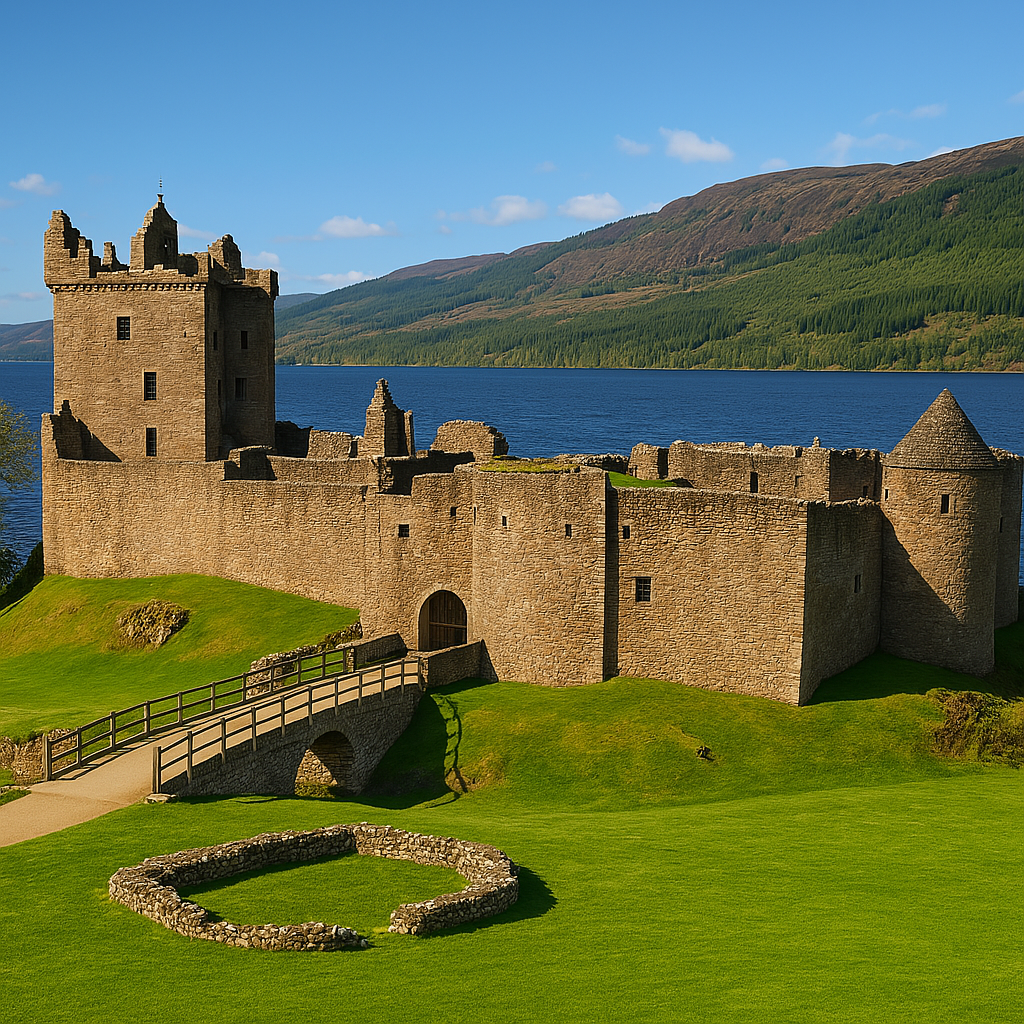
Perched dramatically on a rocky promontory above the dark, enigmatic lake shore, Urquhart Castle stands out as one of the most iconic and storied sites in the Scottish Highlands. Even in its ruined state, the jagged walls and broken towers whisper of a turbulent past filled with battles, political intrigue, and fierce clan rivalries.
A Personal Pilgrimage to the Highlands
After wrapping up the first half of our Scotland trip in the charming streets of Edinburgh, Amy and I headed north to dive into the stunning Scottish Highlands around Inverness.
We booked an excellent 8-hour guided bus tour through GetYourGuide (something we can’t recommend highly enough for first-timers), which took us to some incredible spots: the ancient Clava Cairns standing stones, the poignant Culloden Battlefield, and even a delightful high tea stop in the pretty village of Beauly.
No Highlands adventure would feel complete without a stop at the legendary Loch Ness, and for a history buff like me, the absolute highlight was arriving at the dramatic ruins of Urquhart Castle right on its shores.
We started with a short 20-minute cruise on the loch—sadly, no Nessie sightings for us that day—before docking and getting free time to roam the castle grounds at our own pace.
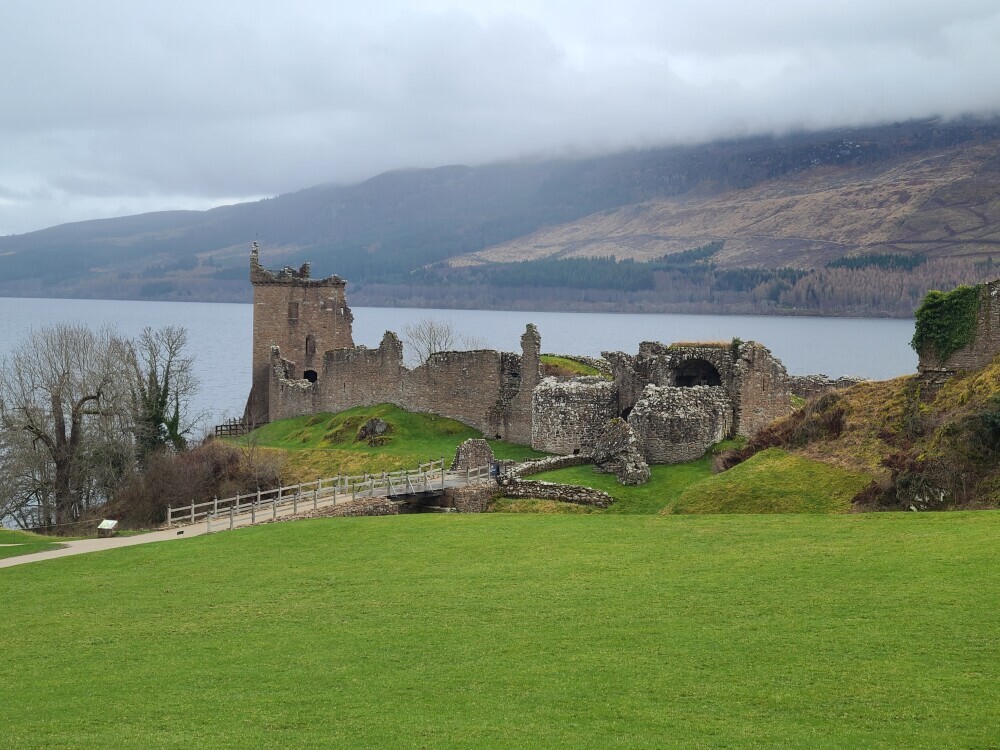
I’d already visited the grand and fully restored Edinburgh Castle earlier in the trip, which was undeniably impressive. But there’s something uniquely captivating about the weathered, romantic ruins of a place like Urquhart—the jagged towers, broken walls, and sweeping views over the dark waters that still stir that deep sense of wonder and connection to Scotland’s turbulent past in me.
The weather was classic Scottish Highlands: overcast skies, a sharp chill in the air, and that ever-present drizzle that somehow manages to sneak through even the best waterproof layers.
It was the kind of damp, moody day that feels perfectly atmospheric for wandering ancient castle ruins and gazing out over a legendary loch—cold enough to make you appreciate a warm cup of tea later, but not so miserable that it kept us indoors. Just the right touch of rugged romance to make the whole experience feel authentically Scottish.
Early History and Pictish Beginnings
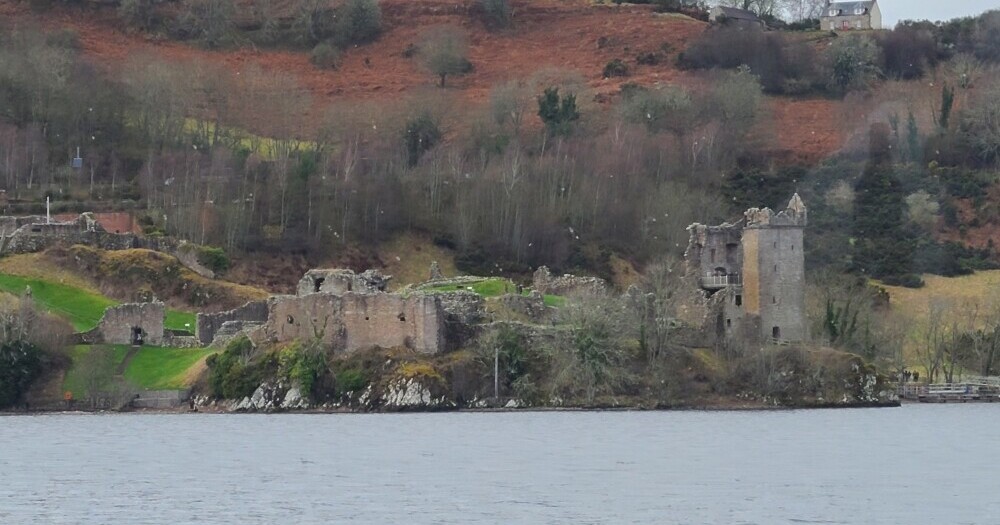
The history of human settlement at Urquhart dates back to the early medieval period. Archaeological evidence suggests the site was inhabited as early as the 6th century AD. According to legend, St. Columba, the Irish missionary credited with spreading Christianity in Scotland, visited the area in 580 AD.
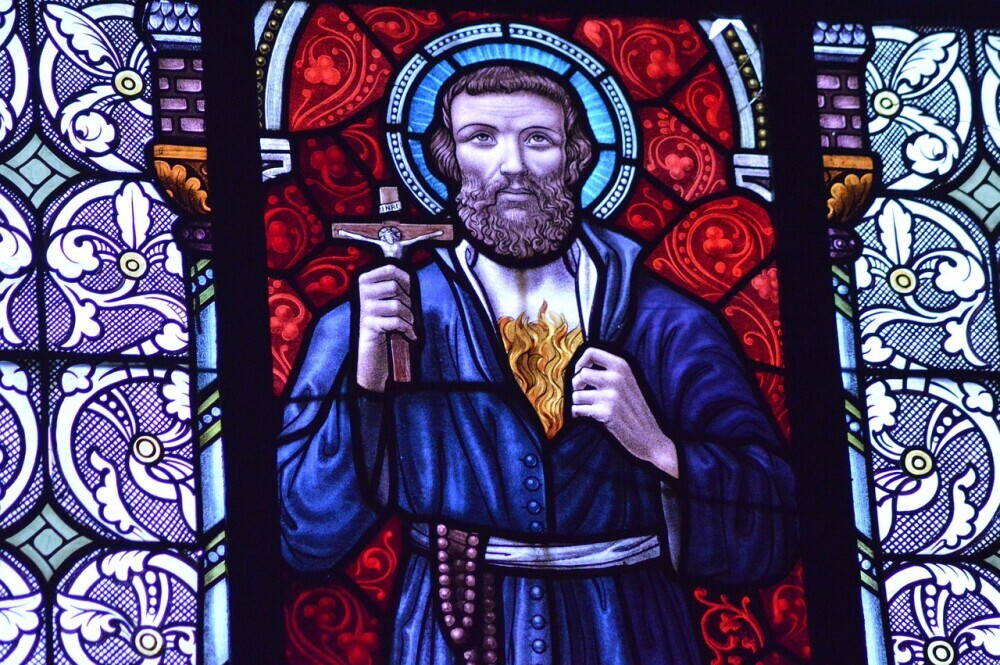
While staying near the site, he is said to have encountered a “water beast” in Loch Ness—an early reference to what later became the legend of the Loch Ness Monster. Unfortunately, we never spotted Nessie ourselves.
Though not a castle in the modern sense, the presence of an early fort or stronghold at Urquhart is very likely, possibly occupied by the Picts, a Celtic people native to ancient Scotland.
The Castle’s Construction and Early Records
The first concrete historical record of Urquhart Castle appears in the 13th century.
Around 1229, King Alexander II of Scotland granted the site to Thomas Durward, who likely began building a fortified structure.
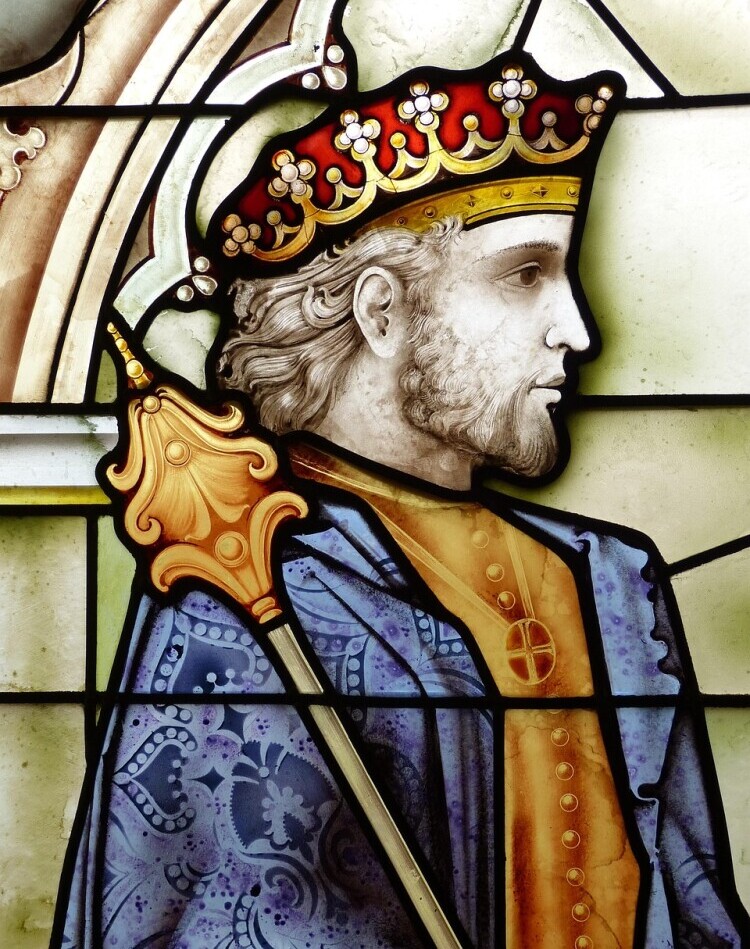
The castle’s early history is marked by the ongoing conflict between Scotland and England, particularly during the Wars of Scottish Independence.
Robert the Bruce and the Castle’s Role in the Wars of Independence
In 1296, during the reign of King Edward I of England, Urquhart was seized by English forces.
The occupation was short-lived, however, as Scottish leaders such as Andrew Moray and, later, Robert the Bruce reclaimed the territory.
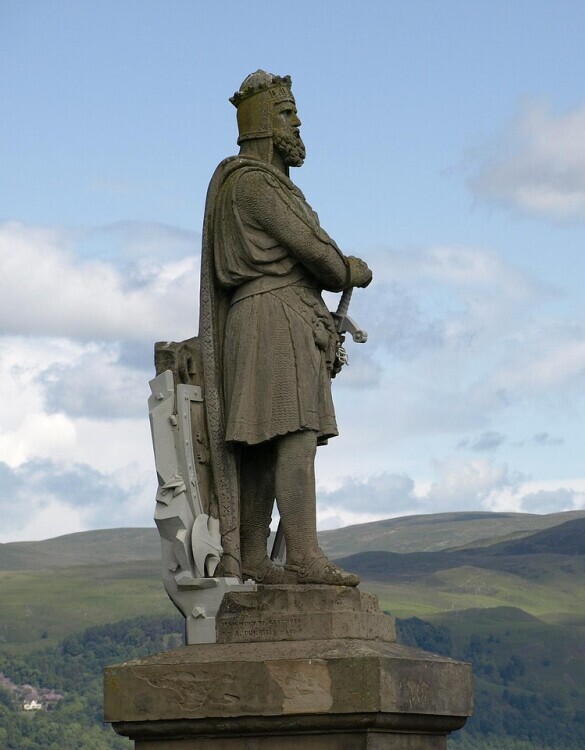
By the early 14th century, Urquhart had become a royal stronghold, with towers, curtain walls, and a large gatehouse added—remnants of which still inspire awe today.
Urquhart Castle didn’t disappoint in that regard. From the moment we stepped through its ancient gate, I was struck with a deep sense of awe and reverence.
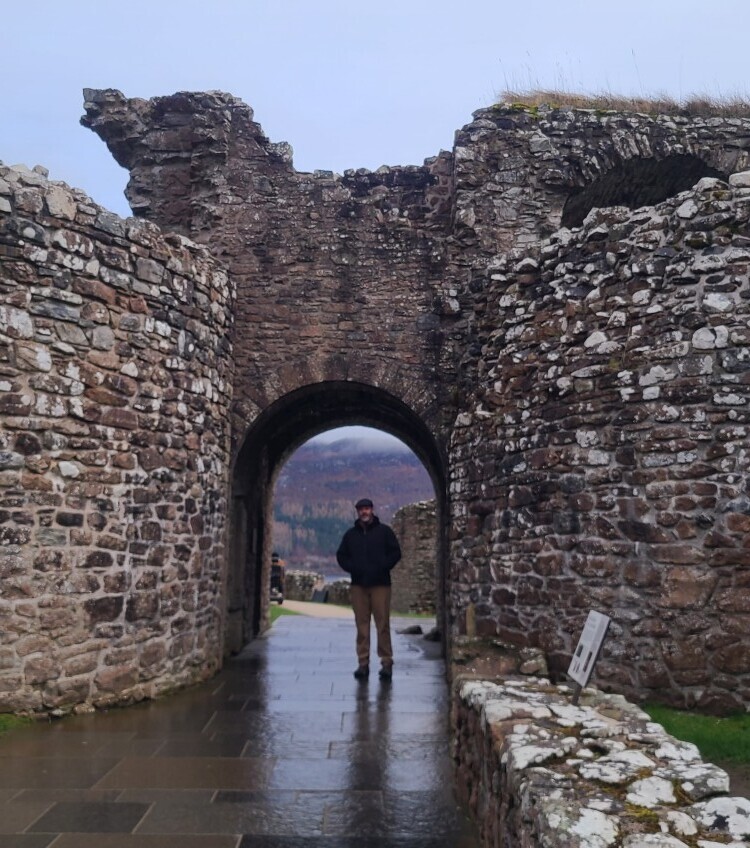
Despite the crumbling walls and weathered towers, the place still held an undeniable power—as if time itself had paused there.
After all, how often does one get to stand on the very ground once walked by kings, warriors, and tyrants alike? It truly felt like stepping back through the centuries.
Clan Rivalries and the 15th and 16th Centuries
The 15th and 16th centuries were marked by violent struggles between powerful Highland clans.
The Clan Grant, who were granted ownership of the castle in 1509, were responsible for much of its upkeep and expansion during this time.
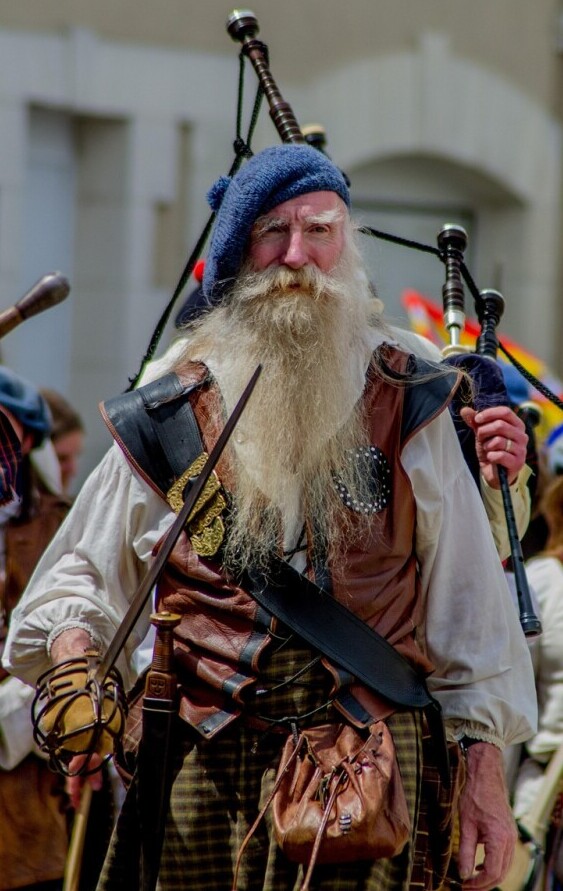
However, their control was repeatedly challenged by the MacDonalds, Lords of the Isles, who saw Urquhart as key to regional dominance.
The MacDonalds launched several successful raids, one of which saw them strip the castle of nearly all its possessions.
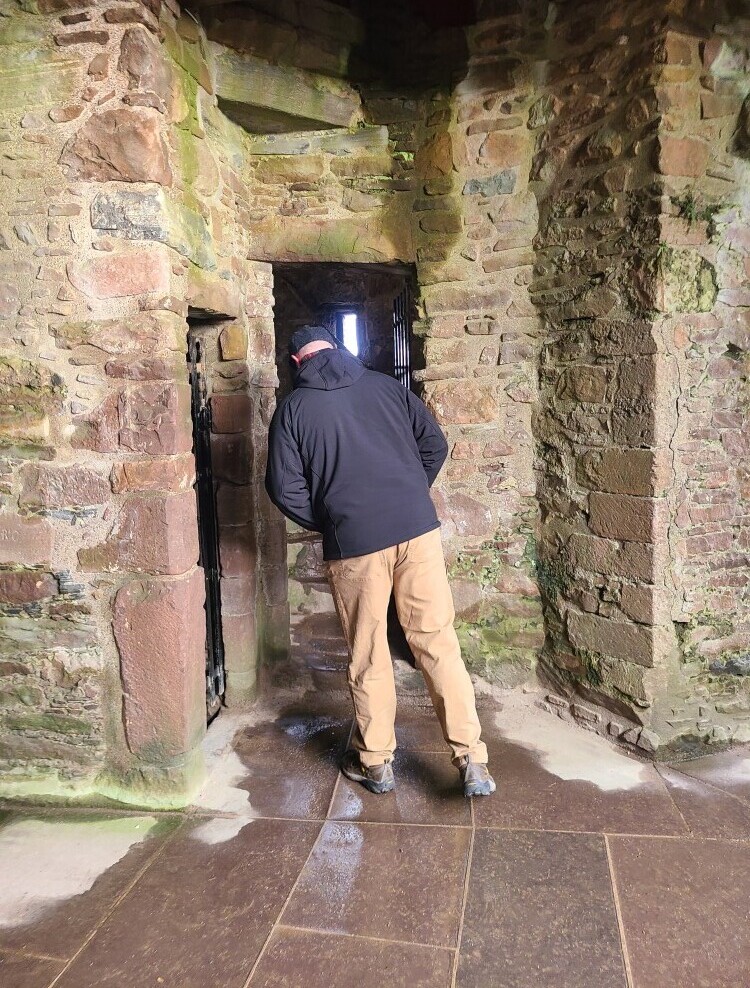
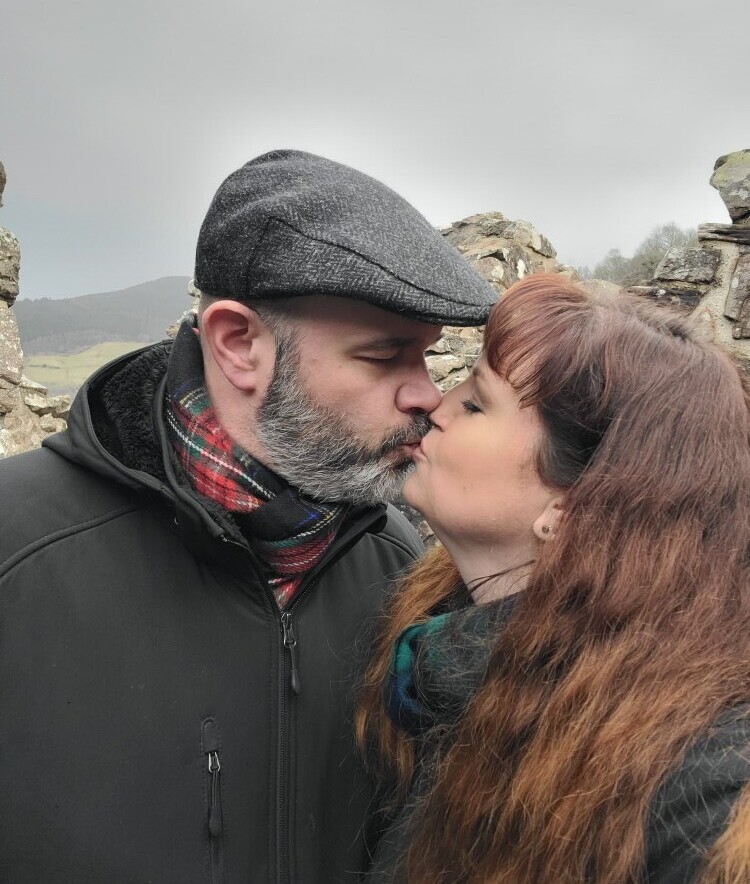
Amy and I wandered through the ruins at a leisurely pace, soaking in every detail. Though only about 25% of the original castle remains, there was still so much to see and discover.
 ,
,
We explored every nook and crumbling corner, and by the end, I felt genuinely grateful for the opportunity to, in a way, step back into history.
The Jacobite Risings and the Castle’s Destruction
During the Jacobite risings in the late 17th and early 18th centuries, Urquhart once again found itself at the heart of conflict.
Government troops stationed there to hold off rebel forces eventually destroyed much of the castle upon their withdrawal in 1692, blowing up key structures to prevent its future use.
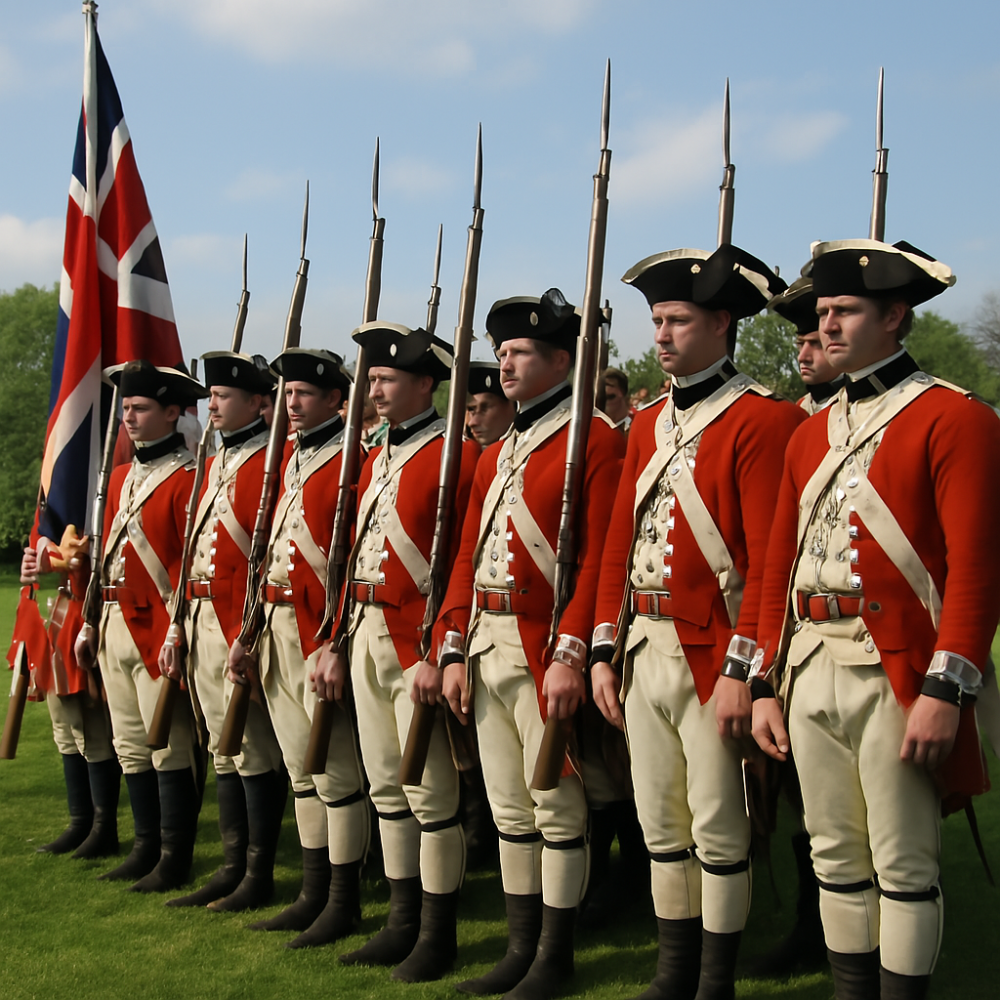
This deliberate destruction marked the beginning of Urquhart’s slow descent into ruin.
Decline, Romanticization, and Preservation
As the centuries passed, Urquhart Castle was left to weather and time. Stones were quarried for nearby homes, and nature slowly reclaimed the structure.
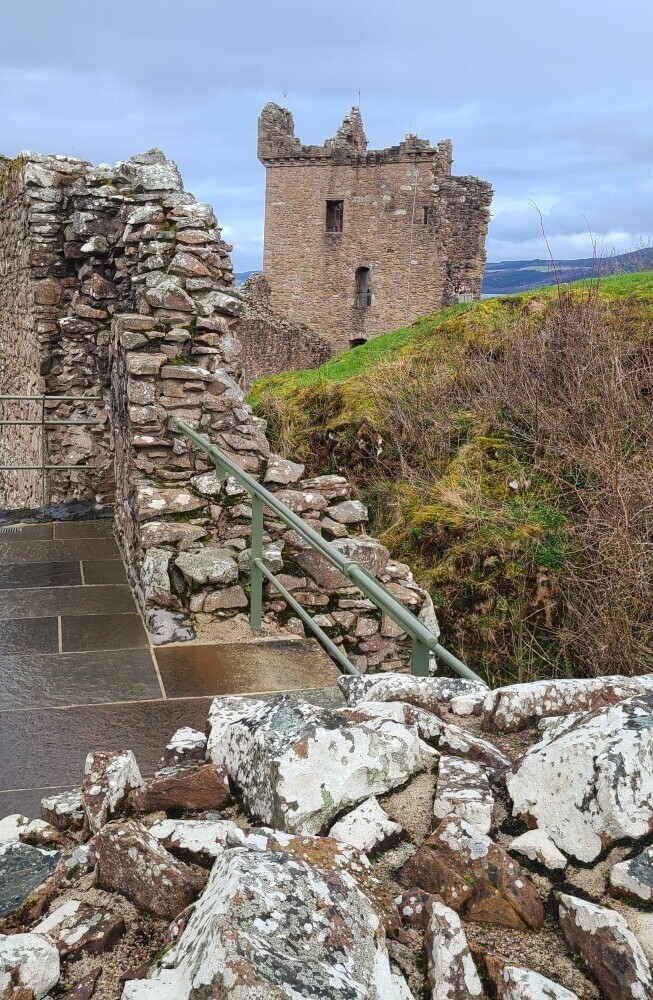
Yet, by the 18th and 19th centuries, the castle’s dramatic silhouette and misty backdrop became an emblem of romantic Scotland, attracting writers, artists, and travelers in search of beauty and history.
In the 20th century, preservation efforts finally began. In 1913, Urquhart came under state care, and today it is managed by Historic Environment Scotland.
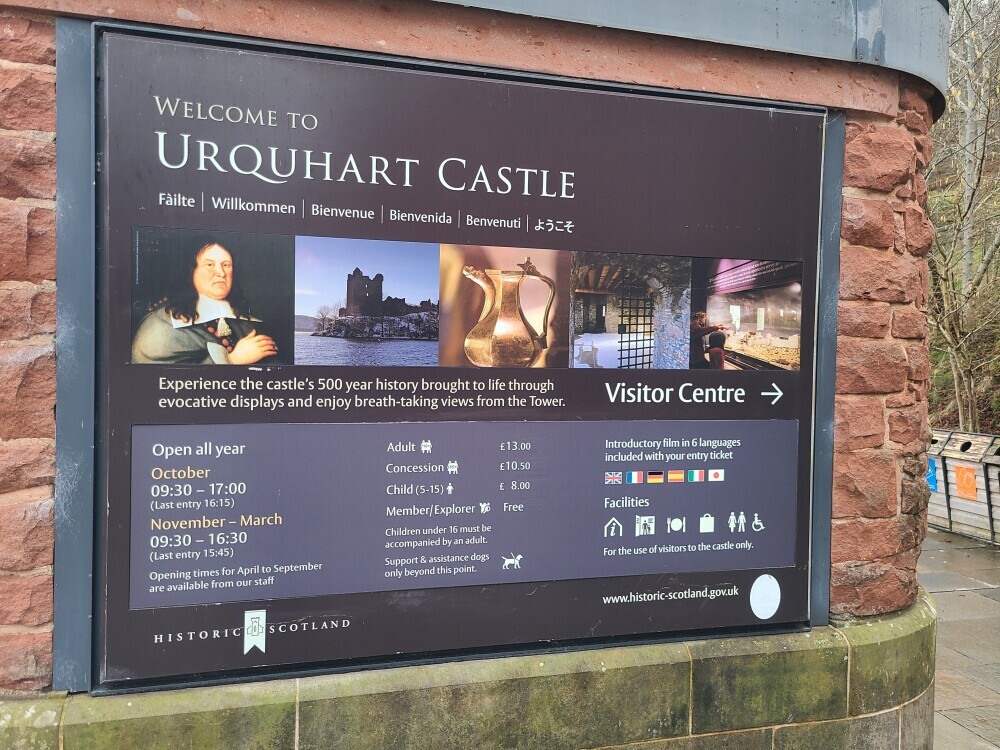
Visitors can explore its surviving features, learn from on-site exhibits, and marvel at the views over Loch Ness—while perhaps keeping one eye open for Nessie herself.
A Symbol of Scotland’s History
Urquhart Castle is more than just a ruin—it is a powerful symbol of Scotland’s resilience and past.
From early Pictish settlements to clan battles and royal intrigues, its stones hold centuries of stories.
And for travelers like us, walking those ancient grounds felt like more than sightseeing—it felt like a personal encounter with the soul of the Highlands.
Pair your castle visit with a tour of nearby Scotch whisky regions — see our full guide here!




Urquhart Castle’s history is incredibly fascinating, and it’s amazing how its enigmatic past continues to spark curiosity. Having visited the site myself, I found the blend of mystery and historical significance to be truly captivating. The castle’s position along Loch Ness gives it such an atmospheric presence that adds to its allure. The idea that the true origins of Urquhart remain shrouded in uncertainty only enhances its charm and makes it a perfect spot for history lovers and mystery enthusiasts alike. It’s a reminder of how much history is left to uncover in these ancient sites.
Hi Slavisa!
For a ruin, it’s truly an awe-inspiring castle to behold—an unforgettable sight. And as a bonus, you might just catch a glimpse of Nessie while you’re there!